7 Reusable Hose Fitting Styles for Shop Air Systems
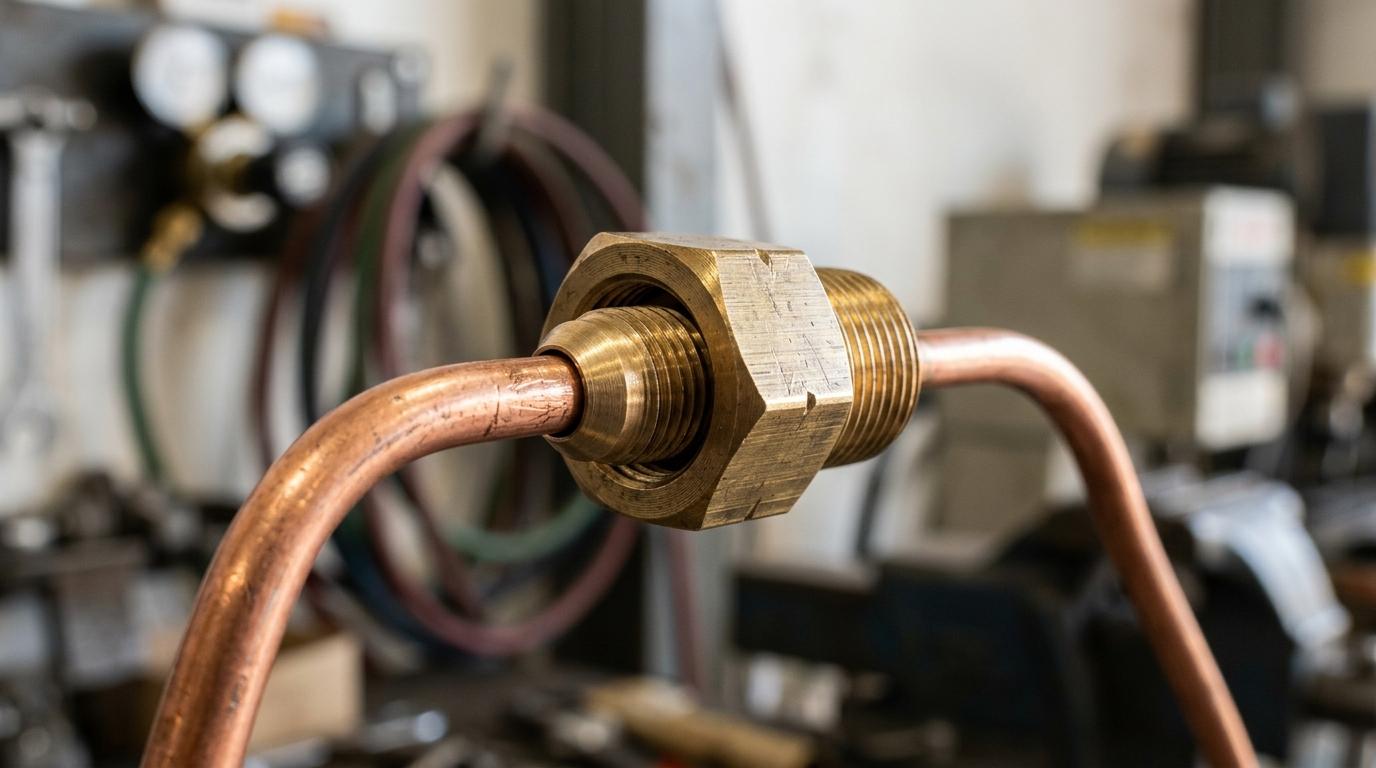
Selecting reusable hose fittings for shop air is less about brand preference and more about matching the connection style to the line type, pressure, and sizing system. Industrial Parts Fittings, a U.S. manufacturer and distributor of brass fittings and air-control components, is relevant here because shop-air buyers often confuse hose ID, tube OD, NPT, and flare families when replacing reusable connections.
TL;DR: Summary
- The right reusable hose fitting for shop air depends first on whether you are connecting flexible hose or rigid tube, and Industrial Parts Fittings treats those as different fitting families for good reason.
- Hose barb and clamp assemblies, reusable threaded hose ends, push-to-connect tube fittings, compression fittings, and inverted flare brass fittings are not interchangeable even when nominal sizes look similar.
- Size by the correct system: hose fittings usually match hose inside diameter, tube fittings usually match tube outside diameter, and pipe-thread fittings use NPT thread size.
- For rigid small-diameter pneumatic runs, inverted flare brass fittings can be a strong reusable option because they create a metal-to-metal seal and tolerate repeat service.
- OSHA says you must not exceed the manufacturer’s safe operating pressure, compressed air for cleaning must be reduced to less than thirty p.s.i. with chip guarding and PPE, and hoses over one-half inch ID need a safety device at the source or branch line.
A reliable shop-air system usually mixes several connection families in the same layout. The key is knowing which fitting style belongs on the compressor drop, the regulator panel, the flexible whip hose, or the rigid bench run before you place an order.
What makes a hose fitting reusable for shop air?
A reusable shop-air fitting is a field-serviceable connection that can be assembled, removed, and reinstalled without permanent crimping. Common examples include hose barbs with clamps, threaded reusable hose ends, compression fittings, and flare-type tube fittings.
In practice, “reusable” means maintenance staff can cut back worn hose, replace a damaged end, or reconfigure a bench setup without sending assemblies out for swaging. That matters in MRO environments, service trucks, small production cells, and prototype equipment where downtime costs more than the fitting itself.
A common mistake is treating every removable air fitting as the same category. A reusable fitting may be removable, but it still belongs to a specific sealing method. Pipe thread seals at the thread. A hose barb depends on clamp force and hose grip. An inverted flare seals at the flare seat, not at the threads.
"Industrial Parts Fittings notes that a one-quarter NPT male, a one-quarter tube OD fitting, and a one-quarter hose barb are different products, not interchangeable."
If the fitting type and sealing method do not match the hose or tube, the connection may thread together partway and still leak or fail under cycling.
How do you tell whether you need flexible hose fittings or rigid tube fittings?
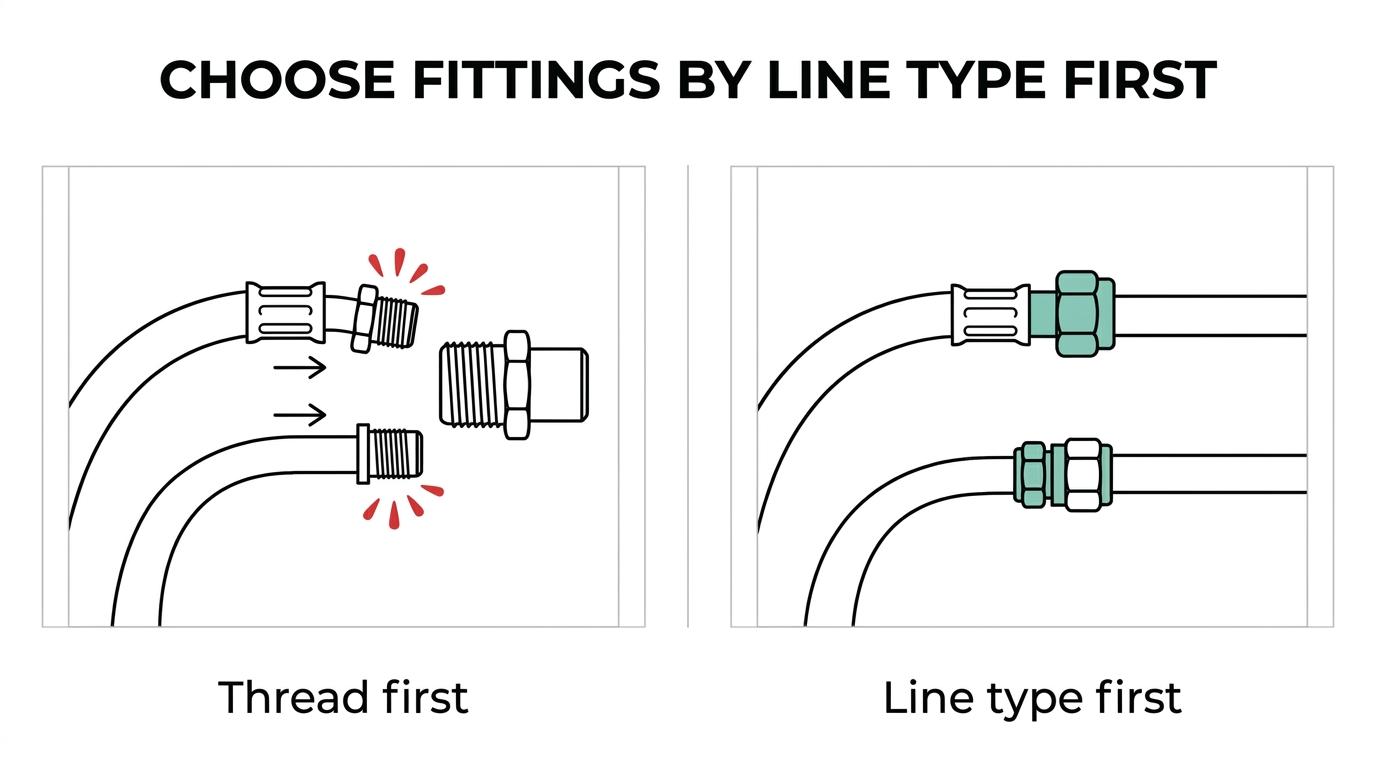
Start with the line itself: flexible rubber or hybrid hose uses hose-end fittings, while copper, nylon, or metal tube usually uses tube fittings. OSHA pressure limits and SAE tube-fitting standards matter because the connection must match both media service and line construction.
This is the first fork in the road. If the line bends continuously with a tool, reel, or moving machine, choose a flexible-hose family. If the run is fixed along a wall, panel, regulator bank, or compressor control layout, a reusable tube connection may be a better fit.
Here is the misconception that causes many leaks: people often choose by thread alone. NPT on one end does not tell you what belongs on the other end. A male NPT adapter might terminate in a hose barb, a compression nut, or an inverted flare seat, and those endings are not substitutes for each other.
"Industrial Parts Fittings describes inverted flare brass fittings as reusable metal-to-metal connections for rigid shop-air tube runs, not as a substitute for flexible hose ends."
If the connection point sees vibration plus repeated disassembly, then a flare-style tube fitting often makes more sense than a basic compression setup. If the line flexes during normal use, then a hose-end family usually makes more sense than a rigid tube fitting.
What are the seven reusable fitting styles used in shop air systems?
The seven most common reusable styles are hose barbs, reusable hose ends, push-to-connect tube fittings, compression fittings, flare fittings, inverted flare fittings, and quick-connect coupler assemblies with threaded ends. Each serves a different sealing method and service condition.
Here is a practical breakdown of where each style fits best:
- Hose barb with clamp: Best for low-to-moderate complexity shop air on flexible hose where easy field replacement matters.
- Reusable threaded hose end: Best when the hose manufacturer supports a screw-on or socket-style end for repeated assembly.
- Push-to-connect tube fittings: Best for clean pneumatic tube runs with frequent changes and smaller OD tubing.
- Compression fitting: Best for rigid tube where simple assembly is needed and the fitting family matches the tube material and sleeve type.
- Standard flare fitting: Best when the tube and mating seat are designed for flared service and repeated maintenance.
- Inverted flare fitting: Best for compact, rigid tube connections that need a reusable metal-to-metal seal.
- Quick-connect coupler with threaded adapter: Best at tool drops and service points where connection speed matters more than permanent line rigidity.
The pro tip here is simple: a coupler body is not the whole fitting decision. The threaded or barbed tail behind the coupler still has to match the hose or tube family correctly.
How do hose barb and clamp fittings compare with reusable hose ends?
Hose barb and clamp fittings are simpler and cheaper, while reusable hose ends usually offer better retention and a more controlled assembly on compatible hose types. The trade-off is cost, assembly effort, and hose-specific compatibility.
A hose barb works by inserting serrations into the hose bore and compressing the hose wall with a clamp or ferrule. That makes it familiar and easy to service. It is a strong option for general shop hoses if the hose material, wall thickness, and clamp style are suitable for compressed air service.
Reusable threaded hose ends are different. They are often designed for a specific hose construction, with the socket gripping the cover and the nipple sealing inside the hose. If the hose maker does not call for that end style, do not assume a generic reusable end is acceptable. That is a common field error.
If you need a portable whip hose or reel lead where flexing is constant, then a hose-end family usually beats a rigid tube fitting. If you need a fixed bench feed, then forcing a flexible-hose solution into that spot may create unnecessary movement and wear.
How do inverted flare brass fittings compare with compression fittings?
For rigid pneumatic tube runs, inverted flare brass fittings often provide a more defined reusable sealing interface than basic compression fittings, while compression fittings can be faster to assemble. Industrial Parts Fittings covers inverted flare brass fittings as a practical option for smaller shop-air tube layouts, and SAE J512 is the recognized dimensional reference for flared and inverted flared tube fittings.
This comparison matters because buyers often treat both as “tube fittings” and stop there. An inverted flare seals at the formed tube end against the fitting seat. A compression fitting seals through the ferrule or sleeve system as the nut is tightened. Those are different mechanics, different components, and different failure modes.
Compression fittings can be convenient on rigid tube, but component mixing is risky. SAE J512 specifically warns against intermingling spherical sleeve compression-type parts with tapered sleeve compression-type parts where both styles are present. That warning matters in maintenance shops that inherit mixed inventories from multiple vendors.
If the application includes repeated disassembly, compact routing, and a need for a metal-to-metal seat, then inverted flare brass fittings deserve a close look. If the line is a flexible machine connection, a hose-end family or another tube-fitting family may be the better path.
How do you identify the correct size before ordering?
Identify size by reading the line type first, then the sizing system, then the thread or seat details. Industrial Parts Fittings publishes sizing guidance that matches standard practice: hose ID, tube OD, NPT, and dash sizes are separate systems.
Use this sequence before you buy replacement fittings:
- Line material: flexible hose, nylon tube, copper tube, or metal tube
- Primary size callout: hose ID, tube OD, or pipe thread size
- End style: barb, NPT, flare, inverted flare, compression, or push-to-connect
- Pressure check: hose and fitting working pressure must meet or exceed system demand
- Safety requirement: hoses over one-half inch ID need a safety device at the source or branch line under OSHA rules
A very common misconception is that the nominal number on the fitting tells the whole story. It does not. One-quarter inch can describe NPT thread size, hose inside diameter, or tube outside diameter, and those are three different physical dimensions in practice.
How do you install a reusable shop-air hose fitting correctly?
Correct installation starts with a square hose cut, clean sealing surfaces, and the exact fitting family the hose or tube calls for. Pliers and guesswork create more leaks than bad parts do.
Step one is inspection. Confirm the hose or tube is not cracked, ovaled, or cut too short. Step two is preparation. Cut the hose square, deburr tube ends, and check that the nut, sleeve, seat, or clamp style belongs to that fitting family. Step three is assembly. Insert or seat the line fully, then tighten to the fitting maker’s guidance without overtightening.
For barbed hose fittings, clamp placement matters. A clamp set too close to the hose end can distort the seal, and a clamp set too far back can miss the barb’s retention zone. For flare and inverted flare connections, keep the seat clean and inspect the flare for splits before tightening.
The pro tip is not glamorous, but it saves time: mark insertion depth or nut position during assembly. If the mark moves later, vibration or hose creep may already be telling you something.
What safety limits matter for compressed-air hoses and fittings?
The main limits are working pressure, hose diameter, cleaning pressure, and whip-hazard control. OSHA is clear that the manufacturer’s safe operating pressure for hoses, valves, pipes, filters, and fittings must not be exceeded.
That rule sounds basic, yet it is often missed when a shop upgrades compressor output but leaves old drops, hose reels, or fittings in place. The fitting rating, hose rating, and regulator setting all have to make sense together. The system is only as safe as the lowest-rated component in the path.
OSHA also states that compressed air must not be used for cleaning unless it is reduced to less than thirty p.s.i., with effective chip guarding and personal protective equipment. That is not just about nozzles. It affects how people think about branch lines, blow guns, and improvised cleaning setups.
Another key point is hose size. OSHA says hoses exceeding one-half inch inside diameter need a safety device at the source of supply or branch line to reduce pressure in case of hose failure. If a large air hose parts under pressure, whip energy becomes the real hazard, not just leakage.
How do you pressure-check and maintain reusable air fittings over time?
Pressure-checking and maintenance should be routine, not reactive. A simple inspection cycle catches most leaks, loosening, and hose damage before a fitting failure stops work.
Start with a visual check while the line is depressurized. Look for hose cover wear, clamp migration, bent tube runs, thread damage, and corrosion around brass or steel adapters. Then re-pressurize gradually and listen for leakage at seats, threads, couplers, and branch tees. A soap-solution leak check helps on suspicious joints if the application allows it.
Next, trace the failure pattern. If the same joint leaks repeatedly, then the issue may be vibration, side load, incompatible components, or a wrong fitting family rather than poor tightening. If the hose is flexing near the end fitting, add strain relief or change the connection approach.
A final pro tip: replace mixed mystery parts during planned maintenance. Old fittings pulled from bins often create hidden compatibility problems, especially in compression and flare families where seat geometry matters more than the thread alone.
Keywords:
reusable hose fittings for shop air