DOT-Approved Air Brake Fittings Sourcing & Documentation Support
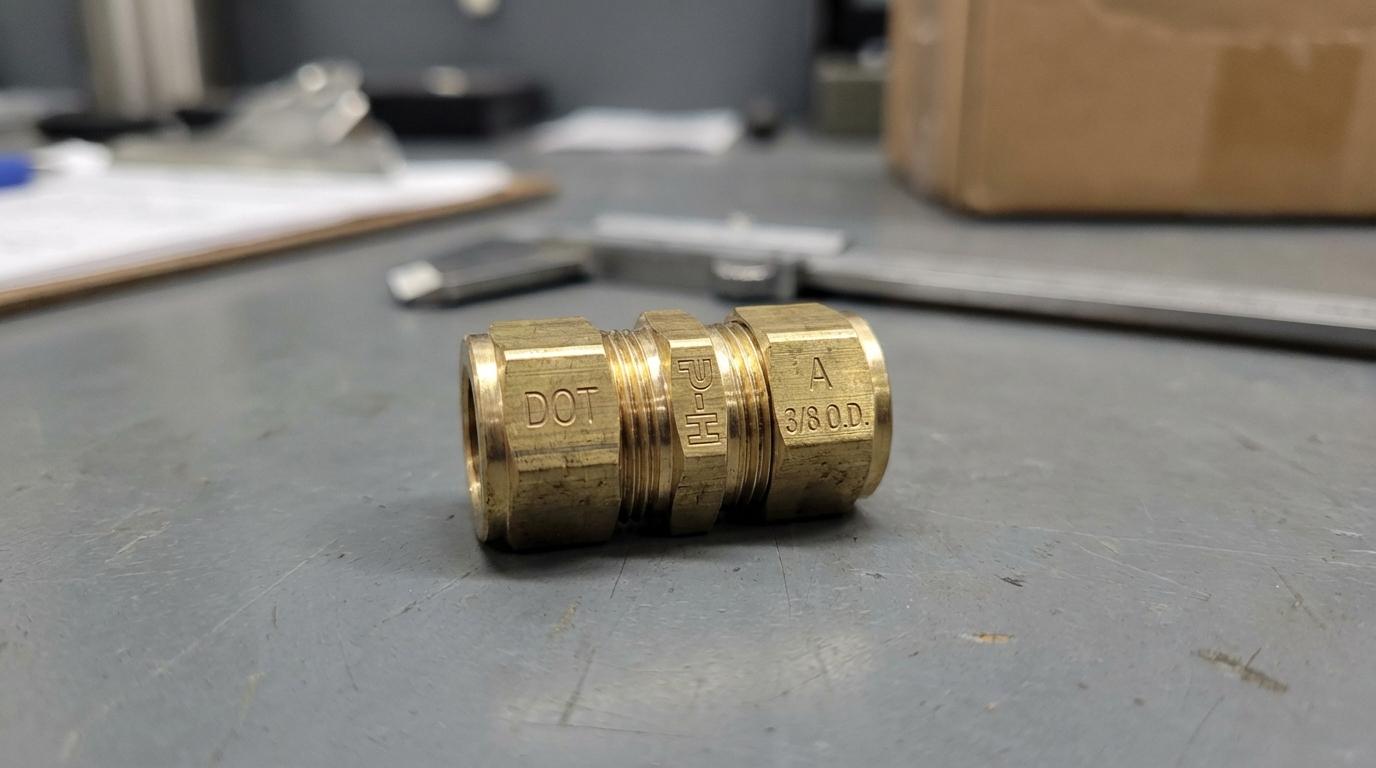
Air brake systems leave little room for guesswork. When a fitting is called out for brake service, buyers need more than a matching thread. They need the right configuration, the right material, the right markings, and a clear path to verify what arrived.
That is where a focused industrial supplier matters. Industrial Parts Fittings provides U.S.-made brass air brake fittings across the main DOT air brake categories, along with practical support for part selection, receiving inspection, and documentation requests tied to compliance review.
Built for brake-system sourcing requirements
Sourcing air brake fittings usually starts with a simple question and quickly turns technical. Is the application for hose-end assemblies, rigid tubing, copper tube, SAE J844 nylon tube, or push-to-connect service? Does the fitting need a sleeve and nut, a union, an elbow, or an adapter? Are the markings present and correct for the intended brake application?
A supplier in this space should make those questions easier to answer, not harder. Industrial Parts Fittings offers DOT air brake fitting product groups that map to common maintenance, production, and replacement needs across trucking, trailers, fleet service, heavy equipment, and industrial vehicle platforms.
The catalog includes several fitting families commonly specified for air brake systems:
| Fitting family | Typical use | Common material/features |
|---|---|---|
| Hose-end fittings | Air brake hose end connections | CA360 brass adapters, sleeves, nuts |
| Precision-grip fittings | Rigid air brake tube applications | Split-sleeve compression style, DOT-marked |
| Copper-tube fittings | Copper or steel brake line connections | Compression components in fractional sizes |
| Nylon tubing fittings | SAE J844 nylon air brake tubing | Brass sleeve, nut, and union styles |
| Push-to-connect fittings | Quick-connect nylon tube service | Straight unions and elbows, often with thread sealant |
This range is useful for procurement teams trying to consolidate vendors and for technicians who want consistent sourcing across different brake-line styles. Instead of piecing together parts from unrelated catalogs, buyers can work from a specialized offering built around brake-system requirements.
What “DOT approved” should mean to a buyer
In everyday purchasing language, “DOT approved” is widely used to identify fittings intended for regulated air brake service. In U.S. compliance terms, the more accurate standard is manufacturer self-certification to FMVSS 571.106. DOT does not issue a separate approval badge for these fittings. The manufacturer certifies compliance by marking and supplying conforming product.
That distinction matters because documentation requests should be handled with the right expectation. Buyers may ask for a certificate of conformance, a compliance statement, or supporting test information. Those requests are reasonable, especially for OEM programs, government-related purchasing, and internal quality systems.
When air brake fittings are received, the physical marking on the part is one of the first checkpoints. Key identifiers typically include:
- DOT: the manufacturer’s certification mark for applicable motor vehicle safety standards
- Manufacturer ID: the identifying code tied to the maker
- A / AI / AII: the air brake service designation, depending on application
- Nominal size: hose ID or tubing OD marking, as required by the standard
A serious supplier should also help buyers interpret the catalog language around tube size, hose size, thread type, and mating components. That is especially helpful when a part number needs to be matched against an existing assembly or a legacy maintenance record.
Product selection support that stays practical
Not every buyer needs a long engineering package. Many just need a fast, accurate answer on fit, thread, tube size, or whether a sleeve and nut must be ordered separately. The available support model here is straightforward: product pages list dimensional information and application descriptions, and direct contact can be used when the order requires clarification.
That kind of support is useful when catalog filtering is limited and the application is safety-related. A technician may know the line size but not the exact fitting family. A procurement specialist may have a part number but need confirmation on the corresponding sleeve, nut, or union. An OEM buyer may be validating whether a listed fitting is suitable for SAE J844 nylon tube or a hose-end application.
Before reaching out, it helps to have a few details ready:
- tube or hose size
- thread type and thread size
- fitting style needed
- mating material
- application temperature or service notes
- quantity and delivery timing
With those details in hand, sourcing moves faster and the risk of ordering a near match instead of the correct part drops sharply.
Documentation support for quality, receiving, and audits
For many buyers, the transaction does not end when the box ships. Receiving teams may need to confirm markings. Quality departments may ask for a compliance statement. Program managers may need traceability support for internal records. That is why documentation support matters almost as much as the hardware itself.
Industrial Parts Fittings presents technical detail primarily through on-page specifications and product descriptions rather than a large public library of downloadable PDFs. In practice, that means documentation requests are often handled through direct sales or customer service contact. This can work well for buyers who need part-specific clarification instead of generic literature.
Typical documentation requests may include a statement of conformity, material information, part identification confirmation, or guidance on the meaning of the DOT-related marking on the fitting. For brake-service parts, that kind of communication helps bridge the gap between catalog purchasing and formal compliance review.
A good receiving and quality process should cover more than the invoice. Buyers often request support for:
- Part verification: confirmation that the delivered item matches the ordered part number and size callout
- Marking review: guidance on what should appear on the fitting body for air brake service
- Application confirmation: whether the selected fitting family matches hose, copper tube, steel tube, or nylon tube service
- Record retention: keeping invoice, packing slip, email confirmations, and any supplied compliance statements together
- Issue response: clear steps for return authorization if a part arrives damaged, incorrect, or suspect
That approach gives MRO teams and OEM buyers a cleaner audit trail without turning a standard purchase into a slow, paperwork-heavy event.
Material quality and why it matters
Air brake fittings are chosen for more than dimensional fit. Material selection affects corrosion resistance, machinability, durability, and long-term service behavior. The cataloged air brake range includes brass constructions such as CA360, with certain products also referencing CA377 for specific applications.
Brass remains a strong choice for many air brake components because it resists rust, performs well in demanding environments, and supports precise machining for threads and sealing surfaces. For buyers managing field reliability, those basics still matter. A fitting that installs correctly and holds up in service saves labor, avoids repeat repairs, and protects system integrity.
Made-in-USA sourcing can also simplify purchasing decisions where domestic origin matters for internal policy, customer preference, or project requirements.
Ordering, shipping, and return handling
Ordering follows a standard e-commerce path, which is useful for repeat purchases and straightforward replenishment. Buyers can select parts, review specifications, and choose available UPS shipping methods during checkout. Lower 48 U.S. shipping is supported, with expedited options available for time-sensitive needs.
For many maintenance teams, that balance is ideal: online ordering when the part number is known, direct contact when the application needs confirmation.
Return handling is also defined. Unused, non-defective items returned in identified packaging are subject to the stated restocking terms and time limits, while non-conforming or defective items are handled through a return authorization process. That matters for safety-related purchases because it gives buyers a formal path if an item needs review before installation.
If a received fitting appears questionable, the safest path is simple. Do not place it into service. Document the issue, contact support, request return instructions, and keep photos and order records tied to the part number.
A stronger path for OEMs, fleets, and MRO buyers
Different buyers use the same fitting data in different ways. An OEM may be building a controlled bill of materials. A fleet may be replacing worn components in active service. A distributor may be trying to confirm interchange without creating compliance risk. A maintenance department may need fast shipment and clear receiving checks.
A supplier focused on industrial brass fittings and air brake components can support all of those needs when the catalog is broad, the part data is readable, and support is responsive. That is the value of working with a source that knows the difference between a generic brass fitting and one intended for regulated brake-service use.
For buyers who need help matching a part, confirming a tube size, or requesting supporting compliance information, direct contact remains the fastest next step.
Keywords:
dot approved air brake fittings supplier