Brass Fittings Procurement Checklist: Quality Docs, Country of Origin, and Lot Traceability
When buyers set out to buy American made brass fittings, price is rarely the full story. The stronger decision sits where product quality, regulatory fit, and lot traceability meet. A fitting may look identical on a screen, yet the paperwork behind it can separate a dependable supply program from a costly rework cycle.
That is why experienced procurement teams do more than compare unit cost. They verify the alloy, confirm the country of origin, review the supplier’s quality system, and make sure every shipment can be traced back to a lot, heat, or batch record. In regulated applications, that discipline protects far more than margin.
Why buying American made brass fittings can reduce procurement risk
Domestic sourcing often gives buyers a tighter chain of control. Lead times are usually shorter, communication is easier, and the documentation trail is often simpler to verify. When a project calls for repeat orders, engineering changes, or quick-response replacements, those advantages can matter just as much as the original quote.
Country of origin also affects the standards environment around the product. Buyers in the United States often need fittings built to familiar thread forms, pressure requirements, and material references tied to ASTM, ASME, NSF, UL, or D.O.T. expectations. A U.S.-made part is not automatically perfect, but it is more likely to arrive within the framework the customer already uses for print review, inspection, and approval.
There is also a practical cost angle that does not always show up in a first-pass bid comparison. Imports may look cheaper on paper, yet tariffs, ocean freight swings, customs delays, inspection holds, and replacement lead times can change the math quickly. For many OEM and MRO programs, buying American made brass fittings is really a move toward predictability.
Quality documents to request for brass fittings procurement
A brass fitting should come with more than a label and a packing slip. If the part supports potable water, air brake, hydraulic, pneumatic, fuel, or other controlled service, the supporting documents should be part of the sourcing decision before the purchase order is released.
The first layer is the supplier’s management system and the product’s governing standards. ISO 9001:2015 remains a common baseline for supplier quality management. From there, the buyer should match the fitting to the correct technical references: ASTM or ASME material standards, thread standards such as NPT or BSP, and application-driven certifications like NSF/ANSI 61, NSF 372, AB1953, UL, CSA, or D.O.T. when required.
The second layer is shipment-level proof. This is where Mill Test Reports, Certificates of Conformance, EN 10204 3.1 certificates, and signed Declarations of Conformity come into play. These records connect the delivered lot to the specified alloy and, where needed, to lead-free or pressure-service requirements.
A concise review matrix helps teams keep that package straight:
| Document | What it confirms | When it matters most |
|---|---|---|
| ISO 9001 certificate | Supplier has a formal quality management system | New supplier approval, audits, long-term agreements |
| Product datasheet or drawing | Material, dimensions, threads, pressure rating, finish | Quote review, engineering approval, receiving inspection |
| Mill Test Report (MTR) | Alloy chemistry, heat or batch ID, test values | Material verification, regulated applications, audit trails |
| Certificate of Conformance | Shipment meets ordered specs and standards | Routine receiving, customer file documentation |
| Declaration of Conformity | Regulatory compliance statement, often for lead-free claims | Potable water, municipal, commercial plumbing |
| NSF 61 / NSF 372 evidence | Drinking water safety and weighted lead limits | Potable water systems |
| AB1953 compliance statement | California lead-free requirement | U.S. potable water programs, especially California-linked jobs |
| RoHS / REACH statement | Substance compliance or exemption status | Electrical exports, EU-related supply chains |
| D.O.T. approval evidence | Compliance for air brake fittings and related use | Transportation and fleet applications |
After those basics are in place, buyers usually tighten the file with a few non-negotiables:
- Material proof: MTR or equivalent lot-based chemistry record
- Regulatory proof: NSF, AB1953, D.O.T., UL, or other application-specific evidence
- Shipment proof: Certificate of Conformance tied to the exact part number and lot
- Thread standard confirmation
- Pressure rating documentation
- Dimensional drawing or datasheet
Country of origin checks for American made brass fittings
Country of origin is not just a customs field. It affects tariffs, lead times, regulatory confidence, and in some cases the willingness of end customers to approve a source at all. Many procurement teams now place origin verification directly into supplier onboarding because it touches cost control and risk management at the same time.
For buyers who want American made brass fittings, the phrase itself needs definition. Is the part machined in the United States from imported rod? Is the forging domestic? Was final assembly or packaging done here while the fitting body came from somewhere else? A strong supplier should be ready to explain that clearly and back it with records that fit the claim being made.
This is especially useful when a project has Buy American or country-specific sourcing expectations, or when the buyer wants insulation from tariff volatility and offshore shipping disruptions.
A practical country-of-origin review should cover these points:
- Origin statement: Ask how the supplier defines U.S.-made for that product line
- Manufacturing location: Confirm where casting, forging, machining, plating, and assembly occur
- Documentation trail: Check whether invoices, labels, and certificates show consistent origin data
- Tariff exposure
- Freight route stability
- Backup source plan
Lot traceability requirements for brass fittings
Traceability is what allows a buyer to answer a hard question fast: Which installed units came from the affected lot? Without that answer, one suspect batch can turn into a much larger containment problem. With strong traceability, the response can stay narrow, precise, and fast.
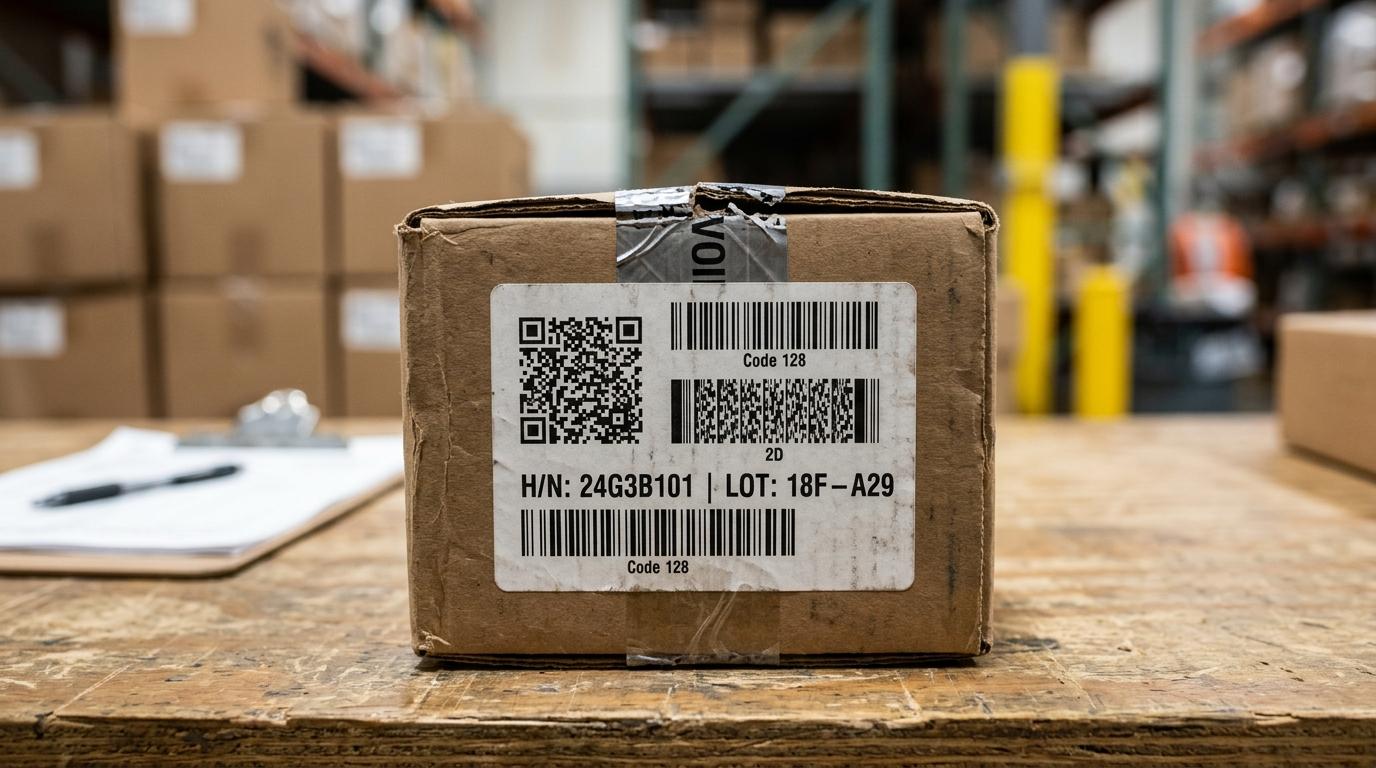
In brass fittings procurement, lot traceability usually starts with a heat, batch, or production lot number assigned during manufacturing. That identifier should carry through to packaging, shipping documents, quality records, and material certifications. If the MTR shows heat number 24A617, the label on the carton and the record in the ERP should point to the same lot without any guesswork.
Receiving controls matter just as much as supplier controls. A beautifully documented shipment can lose its value if cartons are split, relabeled informally, or mixed in stock without preserving the original lot identity. This is why quality teams often require the receiving process to capture lot numbers at the time of receipt, not after parts have already moved into stores or production.
The methods do not need to be exotic. Barcodes, QR codes, ERP lot records, and disciplined packaging practices are enough for many programs. RFID and blockchain systems get attention, yet most brass fitting traceability gains still come from consistent labeling, linked certificates, and warehouse discipline.
Strong lot control usually includes the following:
- Package marking: Each box or bag shows part number, quantity, and lot or heat number
- Document linkage: The lot number on the package matches the MTR and CoC
- System entry: Receiving logs or ERP records capture the lot at receipt
- Stock handling: Lots stay segregated unless formal commingling rules are approved
- Random chemical verification
- Retention of records for audits and returns
Supplier audit points for brass fittings quality and traceability
A supplier may say all the right things and still leave gaps in practice. That is why audits and source reviews remain useful, even for catalog parts. The audit does not need to be elaborate. It needs to reveal whether the supplier’s paperwork is tied to the actual manufacturing and shipping process.
Start with the physical flow. Can the supplier show how raw material heats are received, logged, issued to production, and carried into finished-goods records? Can they show how nonconforming lots are held and how mixed lots are prevented? Those answers say more than a polished brochure ever will.
Then look at how the supplier handles changes. If they switch brass source, plating subcontractor, or machining location, is the buyer notified when the change affects compliance, form, fit, or function? That level of control is especially relevant in potable water and transportation applications.
A brass fittings procurement checklist for buyers and engineers
A solid checklist keeps teams from approving a part on familiarity alone. It also creates consistency across buyers, plants, and business units. When the goal is to buy American made brass fittings with confidence, the checklist should blend commercial, technical, and quality controls.
Use the part drawing or datasheet as the anchor document. Match that against the quote, the supplier’s compliance claims, and the shipment-level paperwork requirement. Then make traceability part of the PO language so there is no debate later about what must ship with the order.
- Confirm part number, size, thread standard, pressure rating, and alloy.
- Verify U.S. country of origin claim and how it is documented.
- Review required standards for the application.
- Specify whether MTRs are required per lot or per shipment.
- Require a Certificate of Conformance with each delivery.
- Add lead-free documentation where potable water use is possible.
- State lot marking and packaging expectations on the PO.
- Define record retention and return traceability requirements.
Questions to send suppliers before releasing a purchase order
Many sourcing issues can be prevented with a short pre-PO questionnaire. The goal is not to create paperwork for its own sake. The goal is to test whether the supplier can answer clearly, consistently, and with evidence.
If the answers arrive vague, incomplete, or inconsistent across departments, that usually signals future friction in receiving, quality review, or customer audits.
A focused supplier message might ask for these items:
- Country of origin evidence: What records support the U.S.-made claim for this fitting?
- Material certification: Will each shipment include an MTR or equivalent heat-level record?
- Compliance coverage: Does the part meet the listed ASTM, ASME, NSF, AB1953, RoHS, REACH, UL, CSA, or D.O.T. requirements where applicable?
- Lot identification method: Where is the lot number shown on the product, package, and paperwork?
- Change control: How are customers notified of material, source, process, or plant changes?
- Custom capability: Can the supplier maintain the same traceability and documentation on modified or custom-fabricated parts?
For procurement teams, engineers, and distributors, that kind of discipline turns brass fittings from a commodity buy into a controlled supply decision. And in many industrial programs, that is where the real savings begin.
Keywords:
buy american made brass fittings