Made-in-USA Brass Fittings Supply (Country-of-Origin Assurance)
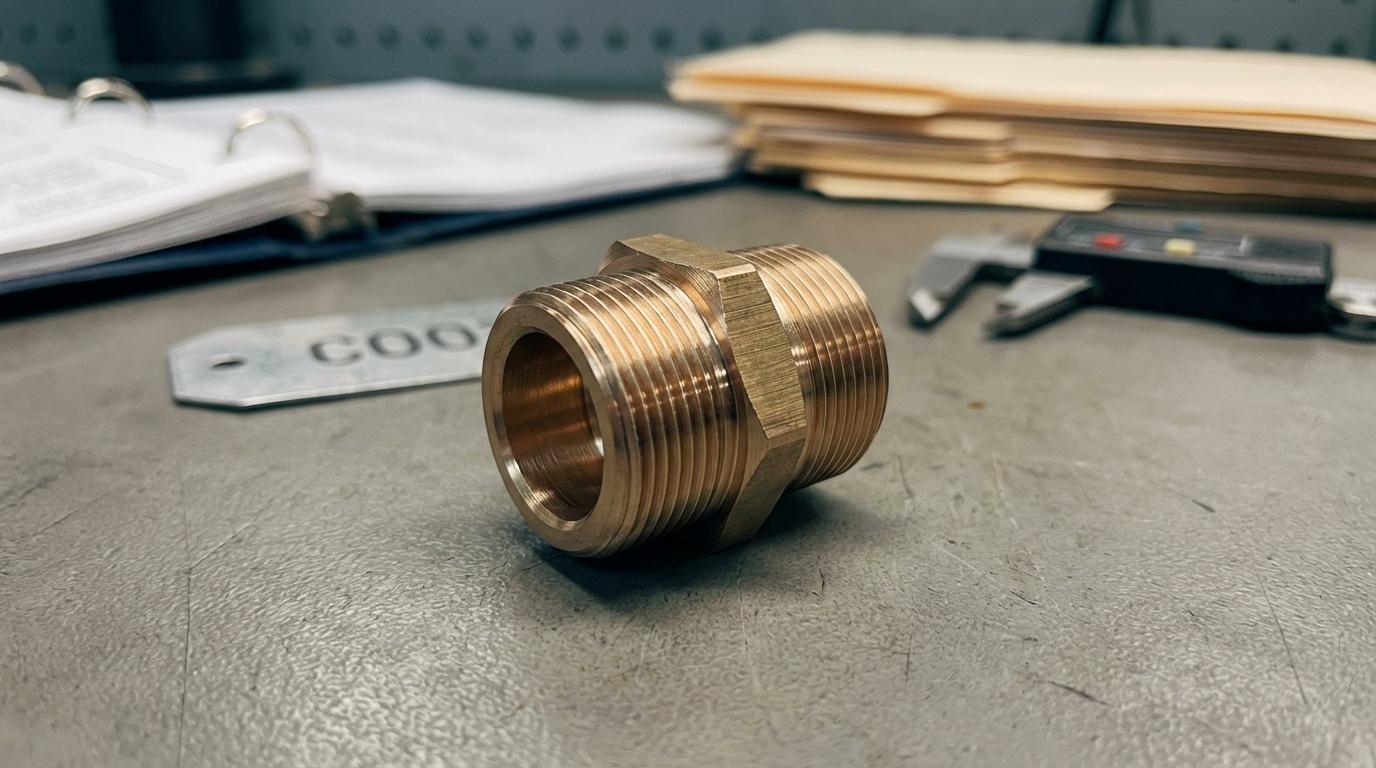
Sourcing brass fittings is rarely just about price and availability. For many teams, it is about proving what you bought, where it was made, and why it belongs in a regulated system. When a project carries domestic preference requirements, lead-free mandates, or safety standards for air brake assemblies, “unknown origin” is not a neutral detail. It is a risk.
Industrial Parts Fittings supplies U.S.-made brass fittings, valves, adapters, and fluid and air control components with a practical focus on country-of-origin assurance for procurement, engineering, OEM, and MRO needs.
What “Made in USA” changes for industrial procurement
Buying domestic fittings can simplify supplier qualification, reduce exposure to import marking questions, and support programs governed by federal or state requirements. It also tends to stabilize lead times because the supply chain is shorter and less dependent on ocean freight and port variability.
That said, serious buyers still need documentation. A “Made in USA” claim has meaning under FTC guidance, and government or federally funded projects often require origin data in a format that matches your internal compliance checklist.
Country-of-origin assurance you can use in real workflows
Country-of-origin assurance is most valuable when it is actionable. That means you can request origin information in writing, tie it to part numbers, and file it alongside your purchasing records.
Industrial Parts Fittings’ published terms state that origin information is available upon request, which supports buyers who must meet government procurement rules (including domestic preference programs). For teams building a compliance folder, that simple commitment matters because it indicates the supplier is prepared to respond when documentation is needed, not only when it is convenient.
After a quick conversation about your requirements, documentation requests often fall into a few predictable buckets:
- Certificate of Origin (COO): A statement supporting U.S. manufacture for the items shipped
- Manufacturer declaration: A signed origin attestation tied to part numbers or order details
- Material or Mill Test Reports (MTRs): Chemistry and material compliance records tied to a heat or batch
- Short email confirmation for internal files
- Packing list annotations for receiving teams
Documentation options, mapped to common compliance needs
The right document depends on what you are trying to prove and who is asking. A municipal buyer may care about lead content and potable water suitability. A defense contractor may care about domestic sourcing rules. An OEM may care about repeatability and traceability.
The table below summarizes the most requested origin and compliance artifacts and how they typically get used.
| Document or record | What it supports | When teams request it |
|---|---|---|
| Certificate of Origin | U.S. origin claim for shipped goods | Domestic preference programs, customer audits, distributor qualification |
| Manufacturer origin declaration | Origin statement tied to part numbers and order | Buy American style requirements, bid packages, vendor onboarding |
| Mill Test Report / Material Certification | Alloy chemistry and material spec evidence | Engineering approval, critical service, customer PPAP-like documentation |
| Lead-free compliance statement (where applicable) | Conformance to low-lead laws and alloy limits | Potable-water adjacent applications, regional compliance (ex: AB1953/S3874) |
| DOT approval reference (where applicable) | Air brake fitting suitability under DOT-related standards | Fleet maintenance, heavy equipment service, brake system rebuilds |
If your program requires a specific format, it helps to share your template early. Many procurement teams already have a standard affidavit or supplier form, and supplying it up front speeds review.
A U.S.-made brass fittings line that covers daily maintenance and specialized builds
Industrial Parts Fittings supports both routine replenishment and engineered assemblies. Buyers can source core items for fluid handling, pneumatic control, and mechanical integration without splitting the bill of materials across multiple suppliers.
Common categories include brass industrial valves (ball, needle, instrumentation, miniature, selector, check, gate, air cocks), flare and inverted flare fittings, compression fittings, push-in tube fittings, garden hose fittings, forged and barstock pipe fittings, hose barbs and mini-barbs, clamps and crimping ferrules, DOT-approved air brake fittings, grease fittings, nylon air brake tubing, and lead-free brass options compliant with CA2745 and related requirements. Select stainless steel and carbon steel ball valves are also available when a mixed-material system calls for it.
Compliance priorities that match demanding applications
Brass fittings live in the intersection of pressure, vibration, thermal cycling, corrosion exposure, and human safety. Quality is not abstract here. It shows up as thread integrity, sealing performance, and consistency across replacement orders.
Industrial Parts Fittings focuses on product sets frequently specified in regulated environments:
- Lead-free brass options: Suitable for buyers who must meet low-lead laws and material restrictions
- D.O.T.-approved air brake fittings: Appropriate for applications governed by vehicle safety requirements
- Thread and dimensional consistency: Built around common U.S. thread conventions and interchange expectations
- Material-backed records: Documentation support when you need to answer an auditor, customer, or inspector
If your use case involves potable water contact, air brake systems, or a government contract flow-down, it is worth defining your exact requirement at RFQ time so the correct material and paperwork path is clear.
Custom-fabricated components with fast turnaround
Catalog parts solve most needs, yet many systems require one more step: a modified port, an uncommon adapter geometry, a tight envelope, or a machined feature that makes installation faster and more repeatable.
Industrial Parts Fittings supports custom-machined parts for teams that need precision-fabricated brass components without waiting through long offshore production cycles. Custom work is often requested to reduce assembly complexity, consolidate fittings, or create a more serviceable interface for field technicians.
A strong custom request usually includes your drawing or sketch, operating pressure and media, thread callouts, preferred alloy (including lead-free requirements), and the documentation you will need at ship.
How procurement teams reduce risk when switching to domestic fittings
A supplier change is easier when it is structured. Teams who adopt U.S.-made fittings typically validate form, fit, and function, then lock in documentation expectations so reorders stay simple.
A practical evaluation approach often looks like this:
- First article review: Confirm dimensions, threads, sealing surfaces, and mating behavior
- Application check: Media compatibility, temperature range, vibration environment, pressure cycling
- Paperwork standardization: Define what is required by default and what is “on request”
- Stocking plan: Set min and max levels for maintenance items and critical spares
This is where country-of-origin assurance becomes more than a label. It becomes part of a repeatable procurement system.
Getting started: specify the part, the standard, and the proof you need
If you are looking for a made-in-USA brass fittings supplier, start with three inputs: what you need, what it must comply with, and what documentation must accompany it. Industrial Parts Fittings can then route you to standard catalog items or a custom path, while supporting origin information requests for buyers operating under domestic preference rules.
Share your part list, drawings, or current equivalents, and include any requirements tied to lead-free laws, DOT air brake usage, or government procurement flow-downs so sourcing and documentation can be planned together.
Keywords:
made in usa brass fittings supplier