DOT Air Brake Compliance Basics: Key Specs Buyers Should Verify Before Ordering
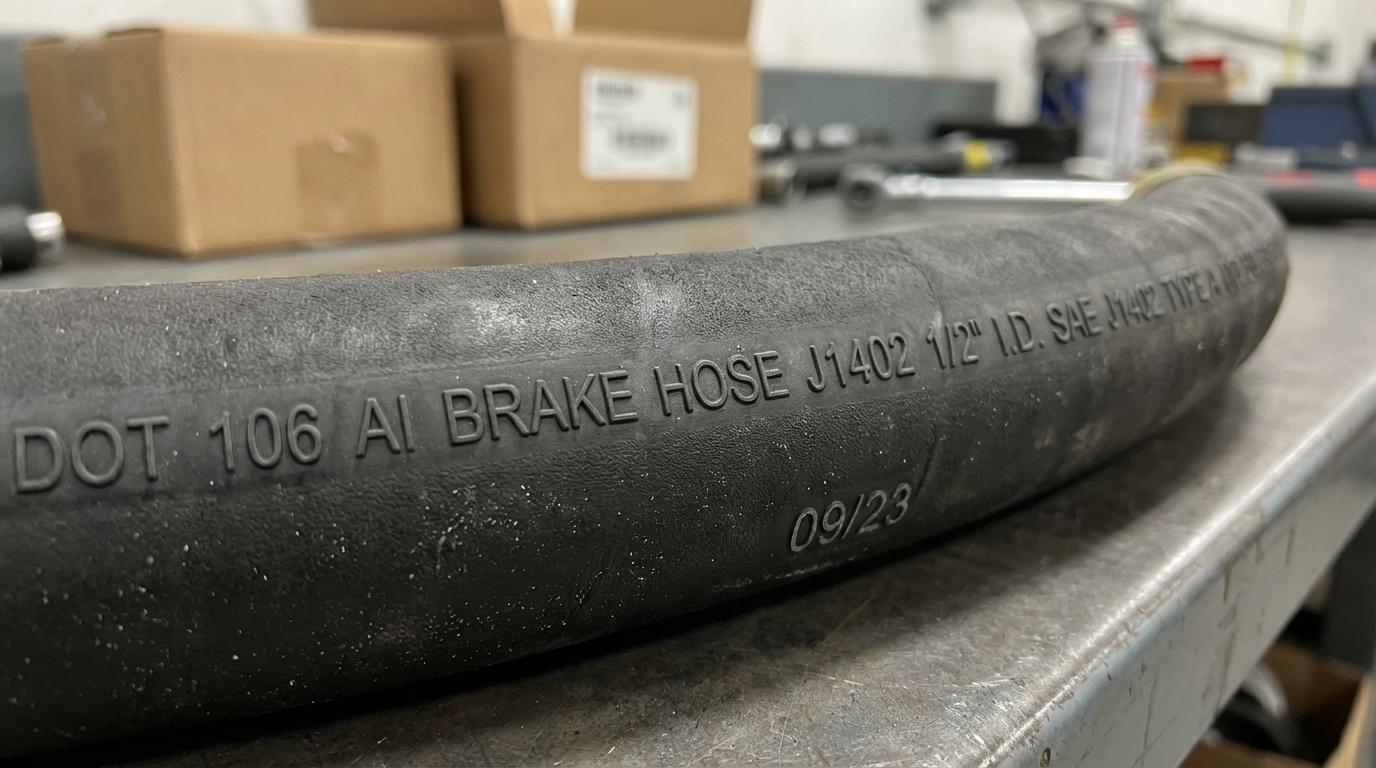
A DOT air-brake order can look deceptively simple: a few fittings, some nylon tubing, maybe a hose assembly or two. Yet those small items sit inside a regulated safety system where performance expectations are non-negotiable, and where a single mismatch in tube type, insert, or labeling can ripple into downtime, rework, or an inspection finding.
The good news is that buyers can verify the right specs before placing a purchase order, without turning procurement into a legal exercise. With a clear view of which rules apply, what “DOT approved” does and does not mean, and what evidence a supplier should be able to provide, teams can buy with confidence and keep vehicles moving.
What “DOT compliant” means (and what it does not)
In U.S. commercial vehicle braking, “DOT compliant” is usually shorthand for meeting the applicable Federal Motor Vehicle Safety Standards (FMVSS) that govern air-brake systems and brake hoses. The key nuance is that the DOT does not typically “approve” individual fittings the way many people imagine. Manufacturers generally self-certify that their products meet the relevant requirements and test methods.
That distinction matters for purchasing. A fitting may be marketed as “DOT air brake,” yet the strongest proof is not a sticker on a bag. It is the fitment details (tube standard, dimensions, required support components), plus documentation and traceability that hold up when a fleet, OEM, or inspector asks how the part was qualified.
A helpful mindset is to treat compliance as a chain: vehicle-level standards drive system-level performance, which drives component expectations, which drives what you verify on the purchase order and at receiving.
The federal standards that shape air-brake purchasing
Two regulations come up repeatedly when buyers are sourcing DOT air-brake components:
FMVSS 121 (49 CFR 571.121) focuses on air-brake system performance for trucks, buses, and trailers. It is not a shopping list for fittings, but it effectively sets the performance environment components must survive inside.
FMVSS 106 (49 CFR 571.106) focuses on brake hoses and hose assemblies and includes required labeling. If you are buying an air brake hose, this one is impossible to ignore because the standard calls out marking conventions and minimum performance tests.
Carrier maintenance obligations also sit in the background. FMCSA requirements in 49 CFR Part 393 expect braking systems to be maintained so vehicles can be stopped safely, which drives many fleets to standardize on components with clear documentation and traceability.
A practical mapping: what to check by item type
The fastest way to reduce ordering risk is to tie each line item to a standard and a verification method. The table below is a working reference for many common orders.
| Item you’re buying | Common governing reference | What buyers should verify before ordering | What “proof” looks like at receiving |
|---|---|---|---|
| Air brake hose (bulk or assembly) | FMVSS 106 (49 CFR 571.106) | Correct type and size, temperature and pressure suitability, and required labeling | Permanent “DOT” marking plus manufacturer code and date code, with legible embossing/banding |
| Nylon air-brake tubing | SAE J844 (commonly used in DOT air systems) | Tube OD, wall, material type, and compatibility with the fitting family | Tube markings and packaging that identify the tubing standard and size, plus supplier documentation |
| Push-to-connect DOT air-brake fittings | Industry practice tied to J844 tubing; often tested to SAE methods | Correct tube OD match, presence of required tube support sleeves/inserts when specified, port thread type | Datasheet identifying tube standard compatibility, correct inserts in the kit, lot identification |
| Compression, flare, and hose-end fittings used in air systems | Component specs plus system expectations under FMVSS 121 | Seat style, tube material match (copper vs nylon vs hose), thread type, plating/material | Clear part numbers, material callout, and a certificate of conformance when requested |
| Valves and air control components | System performance environment under FMVSS 121 | Pressure rating, porting, actuation style, temperature range, duty cycle | Manufacturer documentation and traceability; application notes that match intended use |
This is intentionally buyer-centric. Engineers can drive deeper into test methods, but procurement can still verify the purchase-critical details that prevent mismatched parts from ever entering inventory.
Fittings: where requirements show up in geometry, inserts, and interfaces
“DOT air brake fitting requirements” often show up less as a single law and more as a set of non-negotiable interface rules.
A classic example is SAE J844 nylon tubing paired with push-to-connect fittings. Many DOT air-brake connection designs rely on a tube support sleeve (also called an insert) to reinforce the tube inside the fitting. If the fitting design expects that support and it is missing, the connection can become far more sensitive to pull-out, vibration, and thermal cycling.
Thread identification is another recurring source of mistakes. Air systems may involve NPT ports, straight threads with an O-ring boss, or application-specific interfaces. A fitting can look correct on the bench and still be wrong at installation if the thread form or sealing method does not match the mating port.
Material choice also matters. Brass is common for air-brake fittings due to machinability and corrosion behavior, yet buyers still need to confirm:
- The exact alloy or material spec called out by the equipment or internal standard
- Plating or surface finish when corrosion resistance is critical
- Any lead-free requirements when the same supplier also serves plumbing or potable-water applications (a different compliance domain, but often mixed into multi-site procurement catalogs)
One more detail that experienced technicians appreciate: tube routing and vibration management are not solved by the fitting alone. The best-fitting connection still benefits from proper tube support, bend radius discipline, and protection from chafe points.
Markings and traceability you can verify quickly
When time is tight, start with the checks you can do in minutes. FMVSS 106 is especially clear that brake hoses must carry DOT-style markings, and those markings are one of the simplest authenticity signals a receiving team can inspect.
After you have verified the PO matches the intended tube and fitting family, a quick inspection pass can catch many issues before parts reach the shop floor:
- DOT marking present and legible (hoses)
- Manufacturer identification code and date code
- Correct tube OD callouts on packaging and pick tickets
- Lot or batch identification for traceability
- Inserts or sleeves included when required for the connection design
These are small habits that scale well. They also create a paper trail that makes internal audits and supplier corrective actions less painful.
Documentation procurement teams should request (and file)
If a supplier claims DOT suitability, they should be able to support the claim with documentation that matches the item type. That does not always mean a government-issued certificate. It means a credible statement of conformance, supported by test methods, material controls, and traceability.
Before placing a blanket order or qualifying a new vendor, it is reasonable to ask for a documentation packet that includes the essentials:
- Certificate of Conformance: Written confirmation that the supplied part meets the named standard(s) or specification(s)
- Test basis or standard reference: The test method or industry standard used to substantiate performance claims, especially for hose assemblies
- Traceability detail: How date codes, lot numbers, or batch IDs map back to manufacturing records
- Material declaration: Brass alloy identification, plating callouts, and any restricted-substance statements your organization requires
- Change control expectations: How design, process, or sourcing changes are communicated for safety-related items
For many organizations, the real win is consistency. When a part family is qualified with stable documentation and lot tracking, reorders become routine rather than a repeat investigation.
Order failures that are preventable, and what to do instead
Most DOT air-brake sourcing issues are not dramatic failures. They are preventable mismatches that surface as leaks, intermittent faults, maintenance callbacks, or rejected builds.
Common pitfalls include mixing tube standards, ordering the right fitting body but forgetting the correct insert, substituting a look-alike thread, or buying from a channel that cannot provide traceability. Even well-meaning substitutions can go sideways when a supplier uses different internal tolerances or materials than the part you thought you were replacing. In cold‑climate fleets, corrosion from road salt compounds these risks, with premature leaks or seized fittings more likely if alloys and surface finishes are mismatched—a dynamic also seen on exposed body panels, as Pro Detailing documents in its analysis of how Danish winter conditions accelerate paint and substrate degradation.
A simple internal practice helps: require the PO to name the tube standard and connection family, not just “air brake fitting.” Then link receiving inspection to the same identifiers.
Working with a supplier who treats compliance like daily work
The strongest supplier relationships in DOT air-brake procurement share one trait: they treat compliance and quality as a routine process, not a marketing line. That usually shows up as clear product identification, responsive technical support when a buyer needs help matching tube to fitting, and the ability to turn around custom or hard-to-source components without losing traceability.
Industrial Parts Fittings operates in that spirit by focusing on U.S.-made fittings, valves, adapters, and air control components, supporting both catalog items and custom-fabricated needs with fast turnaround. For buyers, that combination can simplify sourcing when a build spans standard DOT air-brake items and specialized variants that still need disciplined documentation.
The most inspiring part of this work is also the most practical: when buyers verify the right specs up front, technicians install with confidence, maintenance cycles smooth out, and fleets spend more time moving freight and less time chasing air leaks in the yard.
Keywords:
dot air brake fitting requirements