Compression vs Flare vs Push-to-Connect: Which Connection Type Fits Your Application?
Choosing between compression, flare, and push-to-connect fittings is less about brand preference and more about matching the joint’s sealing physics to your pressure, temperature, vibration, media, and serviceability needs. When that match is right, systems stay tight, maintenance gets simpler, and procurement stops fighting recurring “mystery leak” tickets.
Three connection styles, three sealing philosophies
Compression, flare, and push-to-connect fittings can all produce dependable joints, yet they succeed for different reasons.
A compression joint seals when a nut drives one or two ferrules (sometimes called olives) to bite and swage onto the tube’s outer diameter, creating a metal-to-metal seal and a strong mechanical grip.
A flare joint seals when a flared tube end is clamped against a matching conical seat. It is still metal-to-metal, but the geometry shifts the sealing surface to the cone, which tends to perform well under vibration and thermal cycling when assembled correctly.
A push-to-connect joint seals with an internal elastomer O-ring while a stainless collet grips the tube. It trades wrench time for speed and repeatable assembly, assuming the tubing is square-cut, properly inserted, and compatible.
At-a-glance comparison table
The fastest way to narrow options is to compare the dominant constraints: pressure, temperature, vibration, chemical compatibility, and how often the joint will be reworked.
| Connection type | How it seals | Typical strengths | Typical watch-outs | Best-fit scenarios |
|---|---|---|---|---|
| Compression | Ferrule compresses onto tube; metal-to-metal contact | Broad industrial acceptance, strong pull-out resistance, good for instrumentation and plumbing | Sensitive to tube prep and torque; ferrule may be single-use in practice | Instrumentation runs, water and air lines, many brass and stainless tube systems |
| Flare (37° or 45°) | Flared tube cone seats against fitting cone | Excellent under vibration and temperature swings; no elastomer; easy visual inspection of flare | Requires flaring tool and skill; wrong flare angle causes leaks; needs ductile tubing | Refrigeration, fuel and gas service where codes allow, brake and hydraulic-style assemblies |
| Push-to-connect | O-ring seals; collet grips tube OD | Very fast install and removal; great for rework and tight spaces | O-ring limits chemical and temperature range; must use approved tubing; needs support against movement | Pneumatics, serviceable water lines, prototyping, frequent changeovers |
How the joint actually stays tight
The core question is whether you want a deformation-based metal seal, a cone-seat metal seal, or an elastomer seal.
Compression fittings “win” when you need a robust grip on tubing with minimal tooling. The ferrule’s controlled deformation matters, so tube hardness, surface finish, and correct make-up are not details; they are the design.
Flare fittings “win” when vibration and thermal swings are prominent. The cone-seat interface tends to stay stable because the sealing faces remain metal and the load path is straightforward: nut force translates into cone contact pressure.
Push-to-connect “wins” when time, access, and frequent changes matter. The O-ring does the sealing work, while the collet handles retention. That separation is why these fittings can be so quick, and why tubing compatibility is non-negotiable.
Pressure, temperature, and vibration: the real decision drivers
Pressure and temperature ratings vary by manufacturer, alloy, tube size, and standard, so the only safe rule is to spec from published data. Still, the patterns are consistent.
Compression and flare styles, especially in stainless designs, can serve very high pressures because the seal is metal-to-metal and the mechanical engagement is substantial. Push-to-connect fittings are typically aimed at low-to-moderate pressures because the O-ring and retention geometry have practical limits, and derating with temperature is common.
Vibration is where flare fittings often earn their reputation. If you are routing lines on equipment that cycles, shakes, or sees impulse loading, a correctly formed flare joint is hard to beat. Compression fittings can perform well too, but they ask more of installation consistency, tube support, and inspection discipline. Push-to-connect can be perfectly dependable in stable, supported routing, yet it is usually not the first choice right on a vibrating actuator or engine-mounted assembly unless the design explicitly addresses strain relief.
A practical way to translate this into a short shortlist is to rank what matters most for your system:
- Pressure and surge margin: If your system has spikes, pick a connection type and rating that accounts for transients, not just steady-state.
- Temperature and cycling: If you routinely cross hot and cold bands, metal seals generally tolerate that better than elastomers.
- Movement and vibration: If the tube moves, the joint feels it. Favor flare or appropriately rated compression, and add clamps.
Materials and media compatibility
Material selection is where strong procurement and engineering teamwork pays off. The “same fitting type” can behave very differently across brass, stainless, and polymer bodies.
Compression fittings are common in brass for water and air, and in stainless steel for instrumentation, hydraulics, and chemical service. They can work with copper, brass, aluminum, and many steels, and they can be adapted for certain plastics using inserts and careful tube selection.
Flare fittings generally require ductile metal tubing that can be formed cleanly. Copper and mild steel are common; aluminum is also used in some applications with proper matching to reduce galvanic risks. If you cannot form a reliable flare, this option drops off quickly.
Push-to-connect fittings depend on O-ring chemistry and tube OD consistency. Water-rated push fittings are often designed around copper, PEX, CPVC, PE-RT, or HDPE, while pneumatic push fittings commonly target nylon or polyurethane tubing. When oils, fuels, solvents, or aggressive washdown chemicals enter the picture, elastomer compatibility becomes a first-order requirement, not a footnote.
If compliance is part of the spec, material choices narrow further. Lead-free requirements for potable water (often tied to AB1953 and S3874 style expectations) can drive brass alloy selection. For regulated categories like D.O.T.-related air brake service, only approved components should be considered.
Installation realities: time, rework, and error-proofing
A fitting style can be “best on paper” and still lose if your installation environment makes it hard to execute consistently.
Push-to-connect shines in cramped spaces and high-mix maintenance because it reduces steps. Compression is a strong middle ground where you have wrench access and want a purely metallic seal without bringing a flaring kit. Flare is slower, but it rewards careful workmanship with a joint that often stays stable for years in harsh duty.
Common assembly steps worth standardizing in work instructions tend to look like this:
- Cut the tube square and control burrs.
- Clean the tube OD where the seal will occur.
- Verify insertion depth or tube engagement.
- Tighten using a defined method (turns from finger-tight, torque guidance, or manufacturer procedure).
- Pressure test in a controlled way before closing up access.
That last step is not optional when the media is combustible, hazardous, or expensive. KJP Plumbing Southampton makes the same point in its guidance on bleeding radiators, noting how small lapses in venting and pressure management can escalate quickly—precisely why controlled testing and procedure matter.
Code, standards, and procurement clarity
Specs get easier when they point to standards rather than tribal knowledge. Flare angle is the classic example: 37-degree (often associated with JIC-style practices) and 45-degree (common in refrigeration and many plumbing flare contexts) are not interchangeable.
The same applies to where push-to-connect is permitted. For potable water, listings and certifications are frequently required by jurisdiction and customer. For gas service, many systems and authorities prefer or mandate specific listed connection approaches, often favoring metal-to-metal joints. For industrial process piping, internal standards may restrict elastomer-sealed fittings in certain areas due to chemical exposure, fire risk, or inspection limitations.
When a project calls for U.S.-made components, fast custom turnaround, or compliance-driven product categories, it helps to source from suppliers who stock broad catalogs and can machine specials quickly. Industrial Parts Fittings supports applications across brass fittings, valves, adapters, and related fluid and air control components, including lead-free brass options and D.O.T.-approved air brake fittings, which can simplify approved-bom planning when requirements tighten.
Where each connection type fits best
Many teams do better with a “default plus exceptions” policy: pick a default fitting family for a system, then document the conditions that trigger a different choice.
Here is a useful mental model for that policy after you have confirmed ratings and approvals:
- Compression: Instrument panels, general industrial fluid lines, permanent or semi-permanent installations where a metallic seal and strong tube grip matter.
- Flare: Vibration-prone assemblies, refrigeration-style cone seats, and applications where a metal cone seal is preferred for thermal cycling.
- Push-to-connect: Pneumatics, frequent changeovers, quick service needs, and builds where speed and repeatability outrank extreme temperature or chemical exposure.
A short selection checklist you can put in a spec
A good spec makes the installer successful and gives procurement a clean substitution framework.
Use questions like these to force clarity before part numbers get locked:
- What are the real max conditions: steady pressure, surge pressure, max temperature, and cycle counts.
- What is the medium: water, air, oil, fuel, refrigerant, inert gas, or something that attacks common elastomers.
- What moves: vibration level, tube support spacing, and whether the joint sees side-load or pull.
- What is the service plan: how often it will be disconnected, and whether field techs have tools and access.
- What must be certified: potable water listings, gas code compliance, D.O.T. requirements, lead-free mandates.
Avoidable failure modes that keep showing up
Most fitting “failures” are installation and application mismatches, not defective parts. Addressing a handful of repeat offenders can dramatically reduce leak rework.
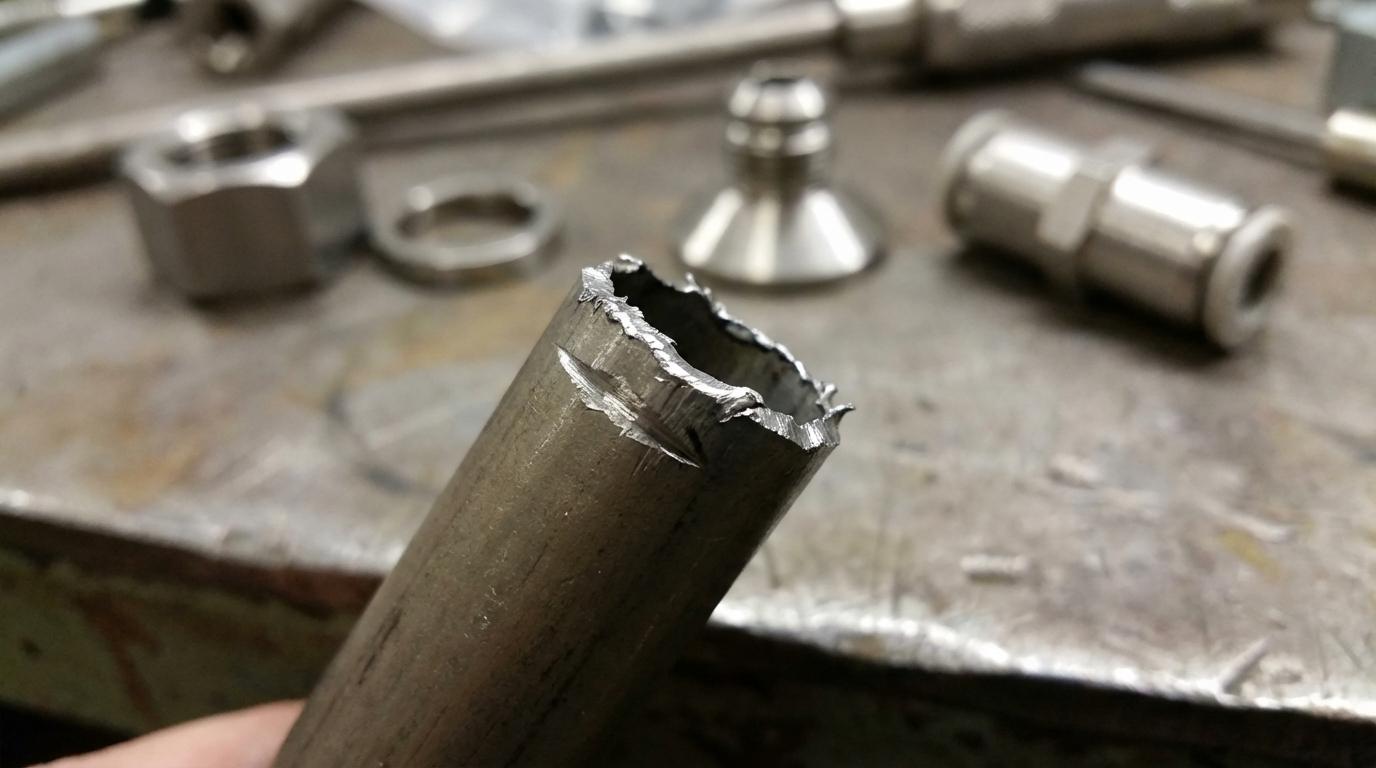
- Tube prep: Out-of-square cuts, burrs, and scratched tube ODs defeat both ferrule seals and O-rings.
- Wrong standard: Mixing 37-degree and 45-degree flare geometries creates leaks that tightening cannot fix.
- Unsupported routing: Movement transfers load into the joint; add clamps and strain relief where vibration exists.
- Overtightening: Crushed ferrules, cracked seats, and deformed flares come from chasing leaks with extra wrench force.
- Unapproved tubing: Push-to-connect fittings only perform as rated with the tubing types and hardness ranges they were designed for.
Getting to a confident choice faster
If you can state your media, maximum pressure and temperature (including surges), tube material and OD, vibration level, and whether the joint must be serviceable without tools, you can usually narrow the choice to one connection family quickly.
From there, the work becomes straightforward engineering: confirm ratings from the manufacturer’s data, verify required listings, and standardize assembly steps so every joint is made the same way, every time.
Keywords:
compression vs flare vs push to connect fittings