Leak-Proof Thread Sealing: PTFE Tape vs Pipe Dope vs Pre-Applied Sealant
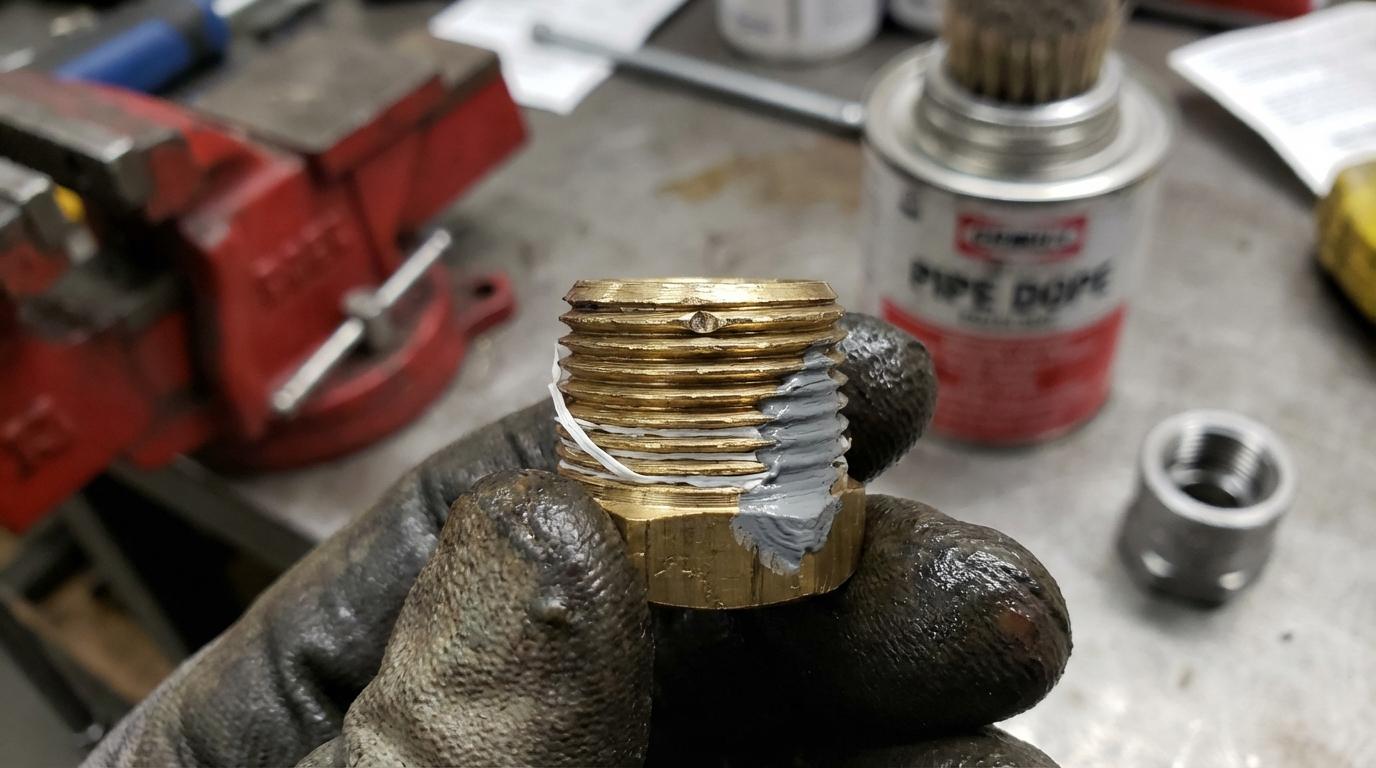
Threaded connections are deceptively simple. Two tapered parts tighten, friction rises, and the joint feels solid. Yet the seal is still made in microscopic voids along the helix of the thread, and those voids are exactly where pressure, vibration, heat, and time like to negotiate for a leak path.
That is why the choice between PTFE tape, pipe dope, and pre-applied sealant is less about tradition and more about matching chemistry, assembly method, and service conditions to the reality of your system.
What thread sealants actually do (and what they cannot)
Most pipe threads used in industrial maintenance are tapered (NPT, BSPT). Tightening creates metal-to-metal interference, but it does not guarantee a pressure-tight seal on its own. A thread sealant fills spiral leak paths, reduces friction so you can reach proper makeup without tearing threads, and often protects against corrosion and galling.
A sealant cannot rescue damaged threads, mismatched thread forms (NPT vs NPS), out-of-round parts, or under-tightened joints. When a connection leaks, it is often because the assembly never achieved the intended thread engagement, not because the sealant “failed.”
A helpful mental model is this: the fitting provides structure; the sealant provides surface conditioning and gap filling; torque provides the compression that makes both work together.
PTFE tape: fast, clean, and more capable than it looks
PTFE thread seal tape is essentially a thin film of polytetrafluoroethylene. That matters because PTFE is chemically inert in most industrial fluids, stays stable across a very wide temperature range, and does not cure or harden in place. When installed correctly, it both lubricates and fills, which is why tape can seal impressively well even on stainless or brass where you want to minimize thread damage.
Tape’s downside is also its strength: it is easy to apply quickly, so it is easy to apply incorrectly. Bad wrap direction, tape over the first thread, or shredded tape in the bore can create leaks or downstream contamination. The fix is not complicated, but it does require a repeatable method.
After a few correct installs, most teams find tape is the cleanest option for everyday NPT work, especially on smaller sizes and frequent change-outs.
Common, practical tape habits that keep results consistent:
- Wrap in the tightening direction
- Keep the first thread clean (start on thread two)
- Use firm tension so the tape conforms
- Smooth the wrap into the thread form
Pipe dope: forgiving sealing power for demanding joints
Pipe joint compound, often called pipe dope, is a paste or liquid applied with a brush or applicator. Many formulations include PTFE solids suspended in oils and fillers, which helps the compound stay in the thread roots and resist washout. In service, many compounds remain pliable (“soft-set”), which can be a real advantage where vibration, thermal cycling, or slight joint movement is expected.
Pipe dope also tends to excel on larger diameters where wrapping tape cleanly is slower, and on joints where you want a bit more forgiveness during assembly. It lubricates threads very effectively, which can help achieve correct makeup without galling, especially on stainless-to-stainless assemblies.
The trade-off is mess and process control. Over-application can squeeze compound into the flow path. Under-application can leave spiral voids. Some compounds are not suitable for certain plastics or specialty services, so the product data sheet matters more here than it does with basic white PTFE tape.
Many experienced technicians keep both on hand and treat pipe dope as the higher control option when the joint is critical or hard to access after startup.
Pre-applied sealants: repeatability when assembly time is money
Pre-applied thread sealants are factory or shop-applied coatings on male threads. The installer assembles the joint without adding tape or paste at the point of use. In high-volume production, kitting, or field work where consistency across shifts matters, pre-coats can reduce variability and speed up assembly.
The main advantage is uniform coverage. A properly applied coating can place sealant exactly where it is needed, on a defined number of threads, with controlled thickness. That consistency can be attractive for OEM builds, packaged skids, or maintenance programs that want fewer “craft-dependent” steps.
The main limitation is rework. If you disassemble the joint, the coating usually needs replacement. Pre-applied systems also require you to trust the declared compatibility of the coating with your media and temperature, since chemistries vary.
A side-by-side view that reflects real shop priorities
Below is a decision table framed around what procurement, engineering, and maintenance teams usually care about: speed, cleanliness, reliability under stress, and what happens when a joint is opened later.
| Criteria | PTFE Tape | Pipe Dope (Thread Compound) | Pre-Applied Thread Sealant |
|---|---|---|---|
| Application speed (field) | Very fast | Fast, slightly slower due to brushing | Fastest (no application step) |
| Cleanliness | Clean, minimal cleanup | Messier, wipe-off needed | Clean in the field |
| Temperature range (typical) | Very wide for standard PTFE | Varies by formula, often high | Often narrower than tape, formula dependent |
| High pressure behavior | Strong when correctly applied and properly torqued | Excellent, often preferred for demanding pressure service | Excellent when coating coverage is correct |
| Vibration and cycling | Good, depends on engagement and torque | Very good, soft-set can “stay with” movement | Very good, depends on coating chemistry |
| Disassembly and rework | Easy, remove and re-tape | Usually manageable, clean and reapply | Often single-use, recoat required |
| User error risk | Medium (wrap method matters) | Medium (coverage and mess control) | Low during assembly, higher in supply control |
Choosing by service, not by habit
The most effective sealing choice is usually dictated by the fluid, the temperature, the pressure, the materials, and how often the joint will be disturbed. When teams standardize by application, leak rates tend to drop because assembly becomes predictable.
After you define service conditions, a simple set of rules can cover most use cases:
- Routine water and general-purpose air: PTFE tape is often the fastest, cleanest standard.
- Combustible gas service: Use a gas-rated product (yellow gas-rated tape or an approved gas compound), and follow local code requirements.
- High-pressure hydraulic with tapered threads: Many teams favor a rated compound or engineered sealant for maximum resistance to micro-movement.
- OEM builds and kitted assemblies: Pre-applied coatings can reduce assembly time and variability.
A compact selection guide that works well in purchasing specs and work instructions:
- Best when speed and cleanliness win: PTFE tape
- Best when vibration and forgiveness win: Pipe dope
- Best when repeatable assembly wins: Pre-applied sealant
- Best when the service is regulated: Use only products explicitly approved for that service
A reliable installation routine (works for tape or dope)
Consistency beats heroics. A short standard work routine is often the highest return “tool” you can give a maintenance team.
Use this sequence to reduce leaks and rework.
- Confirm thread type and condition (NPT with NPT, no cross-threading, no crushed crests).
- Clean male threads and female threads (remove old sealant, chips, oil, and grit).
- Apply sealant correctly: tape with controlled wraps, or compound with a thin, even coat kept out of the bore.
- Tighten to proper makeup (hand tight, then wrench turns per fitting guidance), and stop at correct orientation rather than chasing “one more turn.”
- Pressure test and inspect with an approved leak detection method for the service.
One sentence that belongs in many work instructions: if it leaks, disassemble, clean, and reseal. Trying to “tighten the leak away” without cleaning often damages threads and creates a worse problem.
Common leak causes that look like sealant problems
Even excellent sealants cannot compensate for geometry and torque issues. When troubleshooting, these are the repeat offenders.
First is thread mismatch or poor engagement. Straight threads assembled like tapered threads can feel tight but never seal. Second is thread damage, including galling on stainless, nicked crests, or out-of-round fittings. Third is contamination, where tape strings or excess compound prevent full seating.
Overuse is another classic failure mode. Too much tape can “hydraulic” the assembly, increasing friction and giving a false sense of tightness while actually reducing thread engagement. Too much compound can migrate, contaminate instruments, or create assembly variability between technicians.
Finally, consider system dynamics. Pressure cycling can expose small assembly errors that never show up in a static test. Vibration can loosen joints that were not tightened to the intended makeup. In those cases, the fix is often a better joint standard, not simply switching sealant brands.
Material compatibility notes that matter in the field
Brass, steel, stainless, and many plastics all show up in the same facility. Each pairing changes what “best” looks like.
PTFE tape is broadly compatible with many media and materials, and it is especially helpful as a lubricant on stainless threads to reduce galling risk. Pipe dope is also widely compatible, but specific formulas may restrict use on certain plastics or require specific approvals for potable water or gas. Pre-applied coatings often target metal threads and should be treated as a declared system: use them where the coating is specified for the media and temperature.
One more safety note belongs in any industrial sealing discussion: oxygen service has its own rules. Use only products intended for oxygen environments and follow cleaning requirements for oxygen systems.
Where fitting quality and compliance connect to sealing choices
Sealant choice is only half the story. The other half is the thread quality, material specification, and regulatory requirements of the fitting itself. For procurement teams sourcing brass fittings, valves, and adapters, it is common to balance performance with compliance needs, including lead-free requirements for potable water and specialty approvals for regulated services.
Industrial systems often mix standard catalog parts with custom-machined components. In those cases, a sealing strategy that is clear and repeatable helps protect the value of well-made fittings. When a shop invests in quality brass components, including lead-free compliant alloys where required, pairing them with the right sealant and a disciplined assembly routine is a straightforward way to extend reliability across the whole fluid or air circuit.
Many teams treat this as a small, positive cultural shift: fewer leaks, fewer emergency callouts, cleaner startups, and more confidence that assemblies will hold when the system is hot, cold, pressurized, and in motion.
Setting a practical standard that teams will actually follow
If you want fewer debates at the workbench, write a short standard that names what to use by service and size, then stock those exact items. Keep it simple enough that a technician can apply it at 2 a.m. during an outage.
A strong standard usually includes three ingredients: approved sealants for each service, a repeatable application method, and clear rework rules. The payoff is not just fewer leaks. It is faster commissioning, cleaner maintenance records, and a shop that trusts its own builds.
Keywords:
ptfe tape vs pipe dope