Rapid Prototype Machining for Brass Components
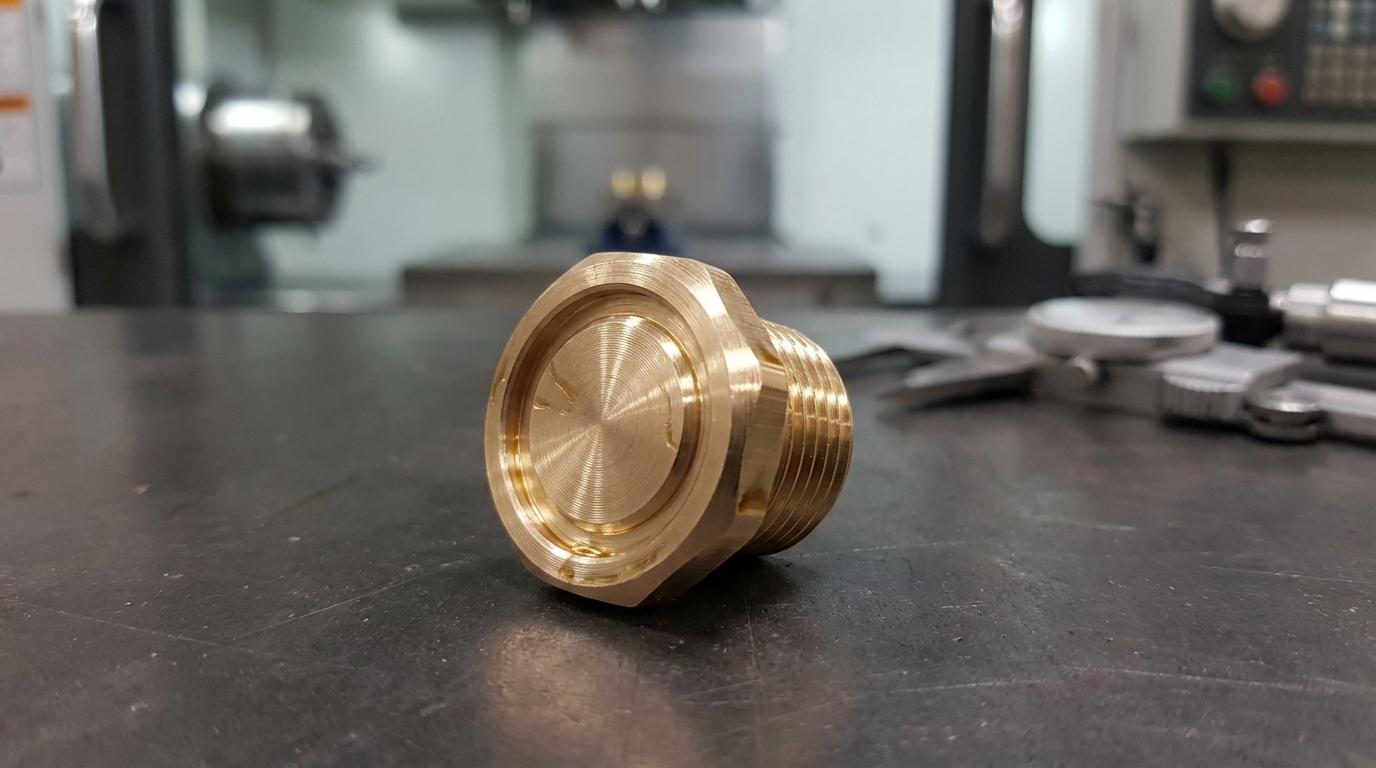
When a brass component has to fit, seal, and perform under real pressure, a prototype made from the same family of alloys can save weeks of redesign. Rapid prototype brass machining delivers that confidence early, with parts cut from solid stock so engineers can validate geometry, threads, ports, and mating interfaces before committing to longer-run production.
Industrial Parts Fittings supports product teams and maintenance organizations that need accurate brass prototypes quickly, whether the end item is a valve detail, a fitting variation, an adapter, or a one-off test coupon for assembly verification.
Why rapid prototype brass machining works so well
Brass is naturally suited to fast-turn machining cycles. Many common brass grades produce clean chips, respond predictably to feeds and speeds, and hold dimensions well, which makes them ideal when iteration is the goal.
A prototype also needs to be handled, assembled, pressure-tested, and sometimes field-evaluated. Brass brings corrosion resistance and a practical balance of strength and ductility, so early samples can be treated like real parts instead of delicate models.
Brass prototypes are also a strong choice when your final design must interface with standard fluid and air components, including flare, compression, pipe, and push-to-connect ecosystems.
What “rapid prototype machining” typically includes
Rapid prototyping is not only about speed. It is about compressing the decision cycle: build, test, adjust, rebuild. CNC turning and milling are the usual foundation because they translate CAD intent into metal without hard tooling.
After an initial review of print requirements, prototypes may be produced as single pieces, small batches, or staged iterations (Rev A, Rev B, Rev C) to lock in thread engagement, wrench clearance, flow paths, or sealing faces.
Common prototype goals include:
- Assembly fit checks
- Flow or pressure testing
- Thread and port validation
- Short-run pilot builds
Brass alloy options for prototypes (and why they matter)
Picking “brass” is rarely specific enough. Alloy choice influences machinability, strength, corrosion performance, regulatory acceptance, and even how a sealing surface finishes off the tool.
Industrial applications often begin with free-machining brass for speed, then move into lead-free options when required by regulation or customer specification. For fluid-contact parts, lead-free compliance can be a gating requirement, not a preference.
Below is a practical snapshot of brass choices frequently requested for machined components and prototypes.
| Brass option (common callout) | Why teams choose it | Typical prototype fit | Notes to confirm early |
|---|---|---|---|
| C360 / CA360 (free-machining brass) | Fast machining, great chip control, consistent results | Early geometry proofs, thread trials, iterative revisions | Verify if lead content is acceptable for the application |
| CA2745 (lead-free) | Compliance-driven builds, potable-water style requirements | Functional prototypes that must match the final compliance path | Confirm certification needs (ex: AB1953 / S3874) and marking requirements |
| CA377 and related forging brasses | Good for parts that mirror forged fitting families | Prototypes that need to mimic catalog fitting behavior | Confirm stock form, grain direction is not usually critical for prototypes |
| Red brass / copper-rich brass variants | Corrosion-focused environments | Select fittings, nipples, or specialty couplings | Confirm galvanic and fluid-chemistry considerations |
A fast prototype is only valuable if it represents the final constraints you will live with. That makes early alloy selection a strategic decision, not an afterthought.
Design choices that speed machining and improve results
Prototype schedules often get tight right when the design becomes interesting. Smart geometry choices help you keep functional intent without turning the part into an endurance test for cutters and setups.
A quick design-for-machinability review typically focuses on tool access, feature stacking, and tolerance placement. If only one sealing land truly needs a tight tolerance, keep the rest realistic and the prototype will move faster.
Consider these high-impact adjustments that often reduce cycle time while improving repeatability:
- Tolerance placement: Put tight tolerances only on sealing, alignment, and thread-critical features.
- Tool access: Avoid deep, closed pockets when an open-sided slot can perform the same job.
- Thread strategy: Use standard thread forms and depths when possible, then validate with mating parts.
- Edge breaks: Call out deburr requirements clearly so assembly teams are not fighting sharp starts.
Small edits like these tend to pay back immediately in both lead time and prototype clarity.
Surface finish, sealing, and real-world function
Many brass prototypes are not cosmetic. They are functional test articles that must seal under torque, accept ferrules, sit flat against an O-ring, or mate cleanly to a valve body.
Machining marks are not automatically a problem, but sealing faces and cone seats are different. If your prototype needs to represent final sealing performance, specify the surface finish requirements where it counts and keep the rest open unless appearance matters.
After machining, finishing options can be used to match the intended production look or improve handling during testing. Typical requests include:
- Deburr and clean
- Light polishing
- Bead-blast style matte finish
- Nickel or chrome plating for match-to-production appearance
If plating is part of the final part definition, it is smart to prototype with it at least once. Plating can change dimensions on critical diameters and threads, and prototypes are the lowest-risk time to quantify that effect.
Quality checks that support confident iteration
Speed does not have to mean guessing. A prototype should answer questions decisively: Does it fit? Does it seal? Does it survive the test cycle? Basic inspection discipline keeps each iteration from becoming a debate.
Prototype inspection commonly includes dimensional verification of interfaces, thread gauging where specified, and focused checks on concentricity or port location when those features drive assembly success.
For regulated applications, the “quality” conversation can also include compliance documentation and material trace expectations. Teams working with air brake systems, lead-free requirements, or controlled OEM supply chains often need those details confirmed before a prototype can graduate into a pilot run.
From prototype to production supply, without rework
A prototype is a stepping stone, not a dead end. The goal is to carry what you learned into a stable part definition that can be reordered, stocked, and supported over time.
Industrial Parts Fittings is positioned to help with that transition because the catalog foundation includes brass fittings, valves, adapters, and related fluid and air control components, while also supporting custom-fabricated solutions. That combination matters when your “new” part is really a variation that must integrate with standard flare, compression, NPT, or D.O.T.-style interfaces.
To accelerate quoting and prevent avoidable revisions, teams often provide a short package that clarifies intent:
- CAD and drawings: STEP file plus a 2D print with GD&T where it matters.
- Material callout: Brass alloy preference, including any lead-free requirement.
- Functional notes: Media, pressure range, temperature range, and the sealing method.
- Quantity and timing: One piece, five pieces, or staged iterations with target dates.
When those inputs are clear, rapid prototype brass machining becomes a reliable tool for moving from concept to tested hardware, and then into repeatable supply.
Keywords:
rapid prototype brass machining